

الخلاصة: كل من فرش الأسنان الكهربائية الصوتية والدوارة-المتأرجحة تتفوق على التنظيف اليدوي بشكل كبير. ولكن إذا كنت تريد ميزة مدعومة بالبيانات فيما يتعلق بالبلاك وصحة اللثة، فإن الفرش الدوارة-المتأرجحة تُظهر باستمرار ميزة صغيرة ولكنها مهمة في الدراسات السريرية. ومع ذلك، فإن الفائز الحقيقي هو الفرشاة التي ستستخدمها بشكل صحيح لمدة دقيقتين كاملتين، مرتين يوميًا.
ما الفرق بين فرش الأسنان الصوتية والدوارة؟
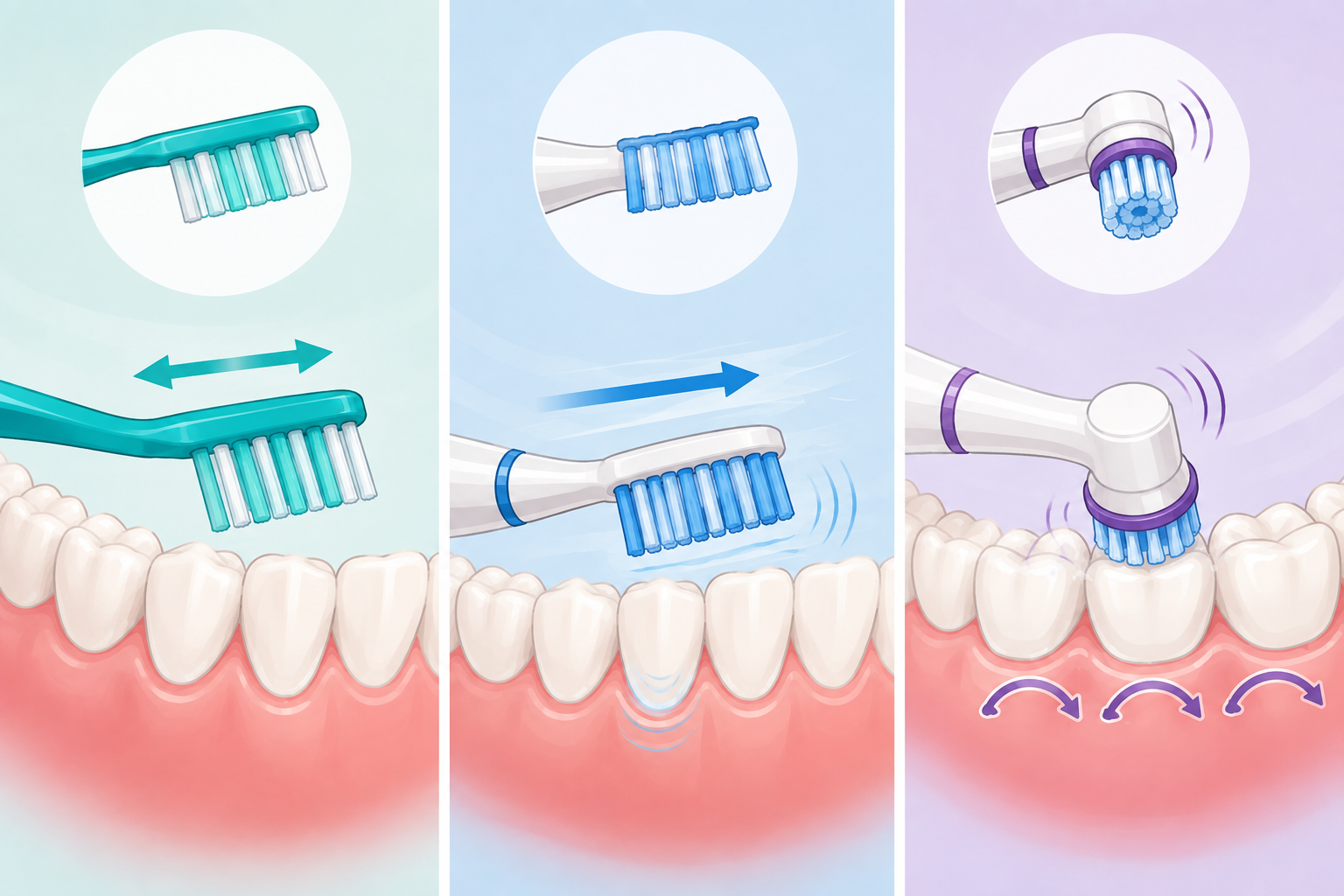
الأمر يعود إلى نوع الحركة. تستخدم فرشاة الأسنان الدوارة-المتأرجحة رأس فرشاة صغيرًا مستديرًا يدور وينبض فعليًا لفرك كل سن. بينما تهتز فرشاة الأسنان الصوتية من جانب إلى جانب بسرعات عالية جدًا - تصل إلى 62,000 ضربة في الدقيقة - مما يخلق حركة سائلة ديناميكية تدفع معجون الأسنان والماء بين الأسنان وعلى طول خط اللثة.
الفرق هو التلامس الميكانيكي مقابل ضغط السائل بعد الشعيرات. فهم هذا يساعد في تفسير لماذا تتفوق كل منها في المواقف المختلفة.

| الميزة | الدوارة-المتأرجحة (أورال-بي) | الصوتية (فيليبس سونيكير) |
|---|---|---|
| الحركة | تدور وتنبض | اهتزاز عالي التردد من جانب إلى جانب |
| شكل رأس الفرشاة | صغير، مستدير | مستطيل، متعدد الخصلات |
| آلية التنظيف | فرك ميكانيكي مباشر | ديناميكا السوائل + تلامس الشعيرات |
| التقنية الأساسية | التوجيه فوق كل سن على حدة | الانزلاق بلطف على طول خط اللثة |
كيف تزيل التقنيات الصوتية والدوارة البلاك؟
فعالية إزالة البلاك يعتمد على تفكيك الغشاء الحيوي اللزج الذي يلتصق بالمينا. تتبع كل تقنية مسارًا مختلفًا لتحقيق هذا الهدف.
- الدوران الترددي: الرأس المستدير يحيط بكل سن. مزيج الدوران والنبض يكسر البلاك الميكانيكي على السطح. يتميز بقدرته على الوصول إلى المناطق الخلفية الصعبة والمناطق بين الأسنان بفضل حجمه الصغير.
- السونيك: اهتزاز الشعيرات يُحدث اضطرابًا في السائل المحيط. على سبيل المثال، يأخذ RANVOO AirJet X5 هذا خطوة إلى الأمام بتقنية الفقاعات الدقيقة وتدفق الماء المزدوجة، مما يخلق حركة سائلة ديناميكية تزيل البلاك بعيدًا عن تلامس الشعيرات. هذا التنظيف "غير الملامس" يغسل بفعالية التلم اللثوي — الجيب الصغير حيث يلتقي السن باللثة.
أي فرشاة تتفوق في إزالة البلاك؟ نظرة على الأدلة السريرية
البحث ليس غامضًا في هذا الشأن. بينما تعمل كلتا التقنيتين بشكل جيد، تُظهر مجموعة كبيرة من التجارب المباشرة أن الفرش الدوارة-الترددية تزيل بلاكًا أكثر.
وجدت تجربة عشوائية مدتها 8 أسابيع أن الفرشاة الدوارة-الترددية حققت انخفاضًا أكبر بنسبة 42.1% في البلاك على كامل الفم مقارنة بفرشاة سونيك فاخرة بعد 4 أسابيع. في المناطق بين الأسنان، كانت الميزة أعلى، حيث بلغت انخفاضًا أكبر بنسبة 159% مقارنة بالسونيك. اقرأ الدراسة كاملة
نتائج رئيسية أخرى من التحليلات التلوية المستقلة:
- مراجعة منهجية لـ 38 مقارنة حددت أن الفرش الدوارة-الترددية كانت أفضل بشكل ملحوظ في تقليل البلاك في 54% من جميع الدراسات، مقاسة بمعايير مؤشرات البلاك القياسية. المصدر
- في تحليل تلوي كبير لعام 2024، احتلت تقنية الدوران-التردد المرتبة الأولى في تقليل البلاك (درجة SUCRA 89.2%) مقارنة بالسونيك (72.4%) واليدوية (18.3%). المصدر
- الميزة واضحة بشكل خاص في البلاك بين الأسنان — البقايا بين الأسنان. أشارت مراجعة منهجية إلى أنه في الأسبوع الثامن، أزالت الموديلات الدوارة-الترددية بلاكًا أكثر بكثير من هذه المساحات الضيقة. المصدر
هل يختلف أداء إزالة البقع والتبييض؟
كلا النوعين من الفرش سيزيلان البقع السطحية من القهوة والشاي بشكل أفضل من الفرشاة اليدوية. الفرق يكمن في الآلية.
- تذبذب-دوران: يمكن أن يشعر التأثير الميكانيكي لتلميع الرأس الدوار بأنه "تنظيف" أعمق وأكثر استهدافًا للأسطح الملطخة. تتضمن العديد من الطرز وضعًا مخصصًا وضع التبييض يستخدم تردد نبض أعلى.
- صوتي: ديناميكا الموائع ورقعة التلامس الواسعة تجعل من السهل تحقيق سطوع موحد وشامل. غالبًا ما يُذكر أنه أكثر لطفًا مع رفع البقع السطحية.
قائمة فحص إزالة البقع السطحية:
- الفرش ذات وضع التبييض أو "التنظيف" تزيد من التأثير.
- كلاهما يتطلب معجون أسنان مبيض للحصول على أفضل النتائج.
- الرأس الصغير المستدير للفرشاة المتذبذبة يسمح بدقة في العمل على المناطق الصعبة.
أي فرشاة أسنان كهربائية أفضل لصحة اللثة؟
هنا، يتحول الحديث من البلاك إلى الالتهاب. تقليل التهاب اللثة هو المكان الذي تصبح فيه البيانات الخاصة بالفرش المتذبذبة-الدوارة أكثر إقناعًا.
-
ميزة التذبذب-الدوران:
- أظهرت دراسة لمدة 12 أسبوعًا انخفاضًا أكبر بنسبة 11.7٪ في التهاب اللثة و انخفاضًا أكبر بنسبة 19.8٪ في مواضع النزيف مقارنة بفرشاة الأسنان الصوتية. المصدر
- وجدت إحدى التجارب أن 84٪ من مستخدمي الفرش المتذبذبة-الدوارة انتقلوا إلى حالة لثة صحية عند 8 أسابيع، مقارنة بـ 53٪ فقط من مستخدمي الفرش الصوتية. المصدر
- يمكن أن يكون التأثير النابض فعالًا للغاية في تفكيك البكتيريا عند حافة اللثة.
-
ميزة الصوتية:
- يمكن للضغط الديناميكي للموائع أن يطرد البكتيريا من الجيوب اللثوية دون تلامس مباشر للشعيرات، مما يجعله خيارًا لطيفًا للثة الملتهبة.
- يمكن أن يوفر رأس الفرشاة الأوسع والحركة الكاسحة تنظيفًا أكثر اتساقًا لخط اللثة لدى بعض المستخدمين.
هل يمكن لفرشاة الأسنان الخاطئة أن تسبب انحسار اللثة أو الحساسية؟
القوة المفرطة هي العدو الحقيقي، وليس التكنولوجيا نفسها. الضغط بشدة واستخدام شعيرات صلبة سيؤدي إلى تلف أنسجة اللثة بمرور الوقت، بغض النظر عما إذا كانت فرشاة الأسنان تتأرجح أو تهتز.
تخفف الفرش الحديثة من هذا الخطر بذكاء:
| عامل الخطر | دوار-دوار (الموديلات الحديثة) | صوتي |
|---|---|---|
| الإفراط في التنظيف | مستشعر الضغط يتوقف عن النبض ويضيء باللون الأحمر | مستشعر الضغط يقلل شدة الاهتزاز ويغير النغمة |
| الشعيرات الصلبة | استخدم رؤوس الفرشاة الناعمة أو "الحساسة" فقط | استخدم رؤوس الفرشاة الناعمة أو "الحساسة" فقط |
| حساسية اللثة | الوضع الحساس يخفض السرعة وقوة النبض | الوضع الحساس يخفض سعة الاهتزاز |
| خطر الانحسار | منخفض، إذا تم توجيه الرأس الدائري الصحيح بشكل فردي وعدم فركه | منخفض، بسبب الإحساس غير العدواني وتقنية الانزلاق |
متى يجب أن تختار فرشاة أسنان صوتية؟
قد تجد أن الفرشاة الصوتية هي الخيار الأفضل لك إذا كنت:
- لديك أسنان ولثة حساسة تتفاعل بحساسية مع إحساس التنظيف الميكانيكي. فرشاة RANVOO AirJet X5، بشعيرات DuPont الناعمة والظهر المغطى بالمطاط، توفر تنظيفًا لطيفًا وفعالًا، مثاليًا للأفواه الحساسة.
- ترتدي تقويم الأسنان أو الأجهزة التقويمية؛ الرأس المطول وديناميكيات السوائل تجعل التنظيف حول الأقواس أسهل.
- لديك زراعة الأسنان أو تيجان حيث تشعر آلية تنظيف ألطف وغير ملامسة بأنها أكثر أمانًا.
- تفضل الإحساس بـ انتعاش كامل الفم واهتزاز دغدغة يبدو أقل إزعاجًا.
- ترغب في عمر بطارية ممتد؛ تعمل العديد من رؤوس فرش الصوتية لأسابيع بشحنة واحدة.
متى يكون فرشاة الأسنان الدوارة-المتأرجحة الخيار الأذكى؟
غالبًا ما يكون التصميم الدوار-المتأرجح هو الخيار الأذكى إذا:
- كنت تركز على أقصى تقليل للبلاك والتهاب اللثة بناءً على البيانات السريرية.
- تعاني من تراكم البلاك الثقيل في الأسنان الخلفية الصعبة الوصول وبين الأسنان.
- ترغب في دقة تنظيف سن بسن تشعر بالعمد والشمولية.
- قد يوصي طبيب أسنانك أو أخصائي صحة الفم بها خصيصًا لاستهداف المناطق التي تعاني من مشاكل باستخدام أداة مثبتة وقابلة للتحكم.
- تفضل رأس فرشاة صغيرًا مستديرًا يمكن أن يحتضن بسهولة تشريح كل سن.
لماذا يفضل أطباء الأسنان غالبًا نوعًا على الآخر؟
لا يوجد فائز مطلق في مجتمع طب الأسنان، لكن الأدبيات السريرية تُظهر ميلًا واضحًا.
نصيحة طبيب الأسنان: “أفضل فرشاة هي التي يستخدمها المريض بفعالية. في الغالب، نرى التزامًا أفضل قليلًا مع الرأس الدوار المستدير لأنه يجبر المستخدم على التفكير سن بسن. ولكن إذا كان الإحساس الصوتي يجعلك تنظف لمدة دقيقتين دون تفويت مناطق، فهو الأداة المناسبة لك.”
أفضل جمعية طب الأسنان الأمريكية (ADA) منحت جمعية طب الأسنان الأمريكية (ADA) ختم القبول الخاص بها لنماذج Oral-B ذات الحركة التذبذبية-الدورانية-النابضة ولمجموعة مختارة من فرش Philips Sonicare. يؤكد الختم على السلامة والفعالية وليس التفوق. في التحليلات التلوية الواسعة، تظهر الفرش ذات الحركة التذبذبية-الدورانية مقاييس متفوقة في تقليل البلاك والتهاب اللثة، مما يؤدي إلى تفضيل سريري ذي دلالة إحصائية عند تحليل الفئات السكانية. المصدر
كيف تقرر عندما يكون لديك أعمال أسنان أو حالات محددة
يجب أن تؤثر أجهزة فمك بشكل كبير على اختيارك.

مصفوفة القرار المبنية على الحالة:
- التقويم: سونيك. يعمل التنظيف بالسوائل حول الأقواس والأسلاك حيث قد يواجه الرأس الدوار صعوبة أو يبلى بشكل أسرع.
- الجيوب اللثوية: تذبذبي-دوراني. يعمل النبض الفيزيائي بفعالية على تفكيك البلاك تحت اللثة في الجيوب المستهدفة.
- زراعة الأسنان والتيجان: سونيك. التنظيف بالسوائل اللطيف وغير الكاشط أقل احتمالية للتسبب في صدمة ميكانيكية حول حافة الترميم.
- بلاك بين الأسنان بكثافة عالية: تذبذبي-دوراني. تظهر البيانات باستمرار ميزة في التنظيف بين الأسنان.
أين تتناسب التكلفة والميزات والتكلفة طويلة الأجل في القرار؟
الشراء الأولي هو مجرد البداية. تكلفة تكلفة رأس الفرشاة البديل تتراكم بمرور الوقت.
| عامل التكلفة | تذبذبي-دوراني (مثل سلسلة Oral-B iO) | سونيك (مثل Philips Sonicare 4100/6100) |
|---|---|---|
| استبدال رأس الفرشاة | استبدل كل 3 أشهر. رؤوس أصغر؛ غالبًا ما تُباع في عبوات متعددة بتكلفة أقل للوحدة. | استبدل كل 3 أشهر. عادةً ما تكون الرؤوس الممدودة الحصرية أغلى قليلاً لكل بديل. |
| الميزات الذكية | تقدم الموديلات الفاخرة تتبعًا للوضع بالذكاء الاصطناعي عبر تطبيق لتوجيه تغطيتك. | تتصل الموديلات الراقية بتطبيق للحصول على ملاحظات حول التنظيف وتوجيهات بشأن الضغط. |
| مؤقت مدمج | قياسي: مؤقت لمدة دقيقتين مع موقّت للأرباع كل 30 ثانية. | قياسي: مؤقت لمدة دقيقتين مع موقّت للأرباع كل 30 ثانية. |
الحكم النهائي: كيف تختار الفرشاة المناسبة لفمك
الفرشاة "الأفضل" هي معادلة شخصية تحددها ملف صحة فمك المحدد وعاداتك اليومية.
- اختر الفرشاة الدوارة إذا كان هدفك الأساسي هو أقصى إزالة للبلاك، وتقليل نزيف اللثة، وتنظيف سنًا بسّن مدعومًا بأدلة سريرية أقوى.
- اختر الفرشاة الصوتية إذا كنت تفضل إحساسًا لطيفًا بتنظيف الفم بالكامل، أو لديك الكثير من أعمال الأسنان، أو ترتدي تقويمًا وتجد أن ديناميكيات السوائل أكثر راحة. فكر في موديلات مثل RANVOO AirJet X5، الذي يجمع بين الاهتزاز الصوتي وتقنية الفقاعات الدقيقة لتجربة تنظيف فائقة.
العامل الوحيد غير القابل للتفاوض هو الاستخدام الصحيح لمدة دقيقتين، مرتين يوميًا. ستفشل كلتا التقنيتين إذا ضغطت بشدة أو تجاهلت خط اللثة. إذا كنت لا تزال غير متأكد أيهما يناسب تضاريس فمك الفريدة، احجز محادثة مع أخصائي صحة الأسنان. يمكنهم مراقبة أسلوبك، وتحديد عوامل الخطر الأعلى لديك، وتقديم توصية شخصية لا يمكن لأي دليل عبر الإنترنت أن يضاهيها.


اترك تعليقًا
This site is protected by hCaptcha and the hCaptcha Privacy Policy and Terms of Service apply.