
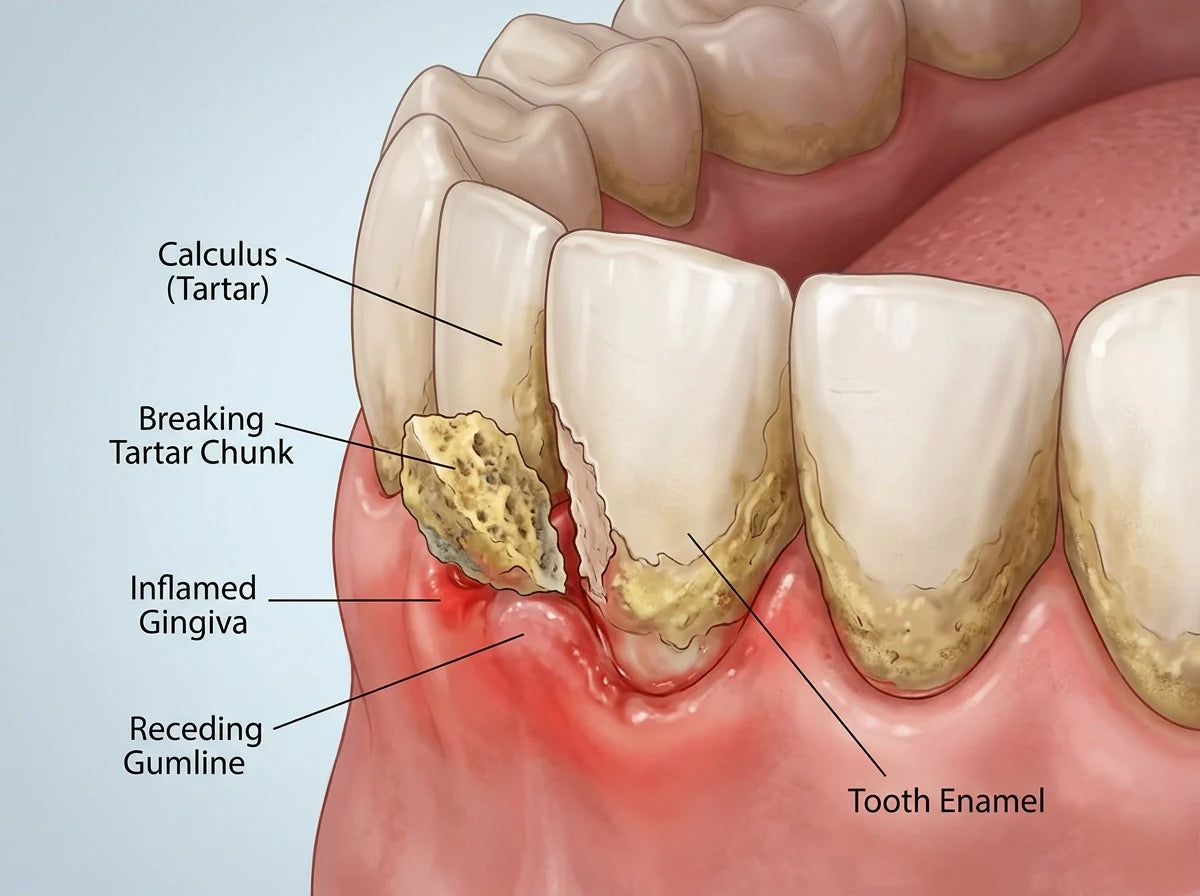
خلاصة سريعة: تكسر الجير هو دائمًا علامة تحذير وليس حدثًا إيجابيًا. قطعة الجير المتكسرة عادةً تترك خلفها حوافًا حادة أو جذورًا حساسة مكشوفة أو تسوسًا أساسيًا. بينما قد تخرج أحيانًا قطعة صغيرة غير ضارة، فإن الخيار الآمن هو التعامل مع أي فقدان للجير كسبب لزيارة طبيب الأسنان خلال أيام قليلة.

إنها لحظة غريبة وغالبًا ما تكون مفاجئة: تشعر بشيء صلب وخشن ينفصل عن أحد أسنانك أثناء الأكل أو الخيط أو تحريك لسانك على لثتك. لثانية، قد تعتقد حتى: "جيد، هذا التراكم القبيح اختفى." لكن هذا الشعور بالراحة في غير محله. قطعة من جير الأسنان تتكسر من تلقاء نفسها نادرًا ما تكون سببًا للاحتفال. إنها إشارة واضحة على أن شيئًا ما كان خاطئًا تحت السطح بالفعل وأن الرعاية المهنية متأخرة.
لماذا لا يتساقط الجير من الأسنان السليمة؟
جير الأسنان ليس قشرة فضفاضة أو بقعة أوساخ يمكن أن تتزحزح. إنه بلاك متكلس — طبقة حيوية معدنية تلتصق بإحكام بسطح السن. بينما البلاك السني هو طبقة ناعمة ولزجة يمكنك إزالتها بالفرشاة، بمجرد أن يتصلب إلى جير، يصبح ترسبًا شبيهًا بالأسمنت يرتبط كيميائيًا بالمينا. هذا الارتباط قوي لدرجة أن الجير لا يمكن إزالته بالفرشاة أو الخيط العادي; فقط أخصائي الأسنان يمكنه إزالته بأمان.
لذا عندما تنكسر قطعة دون أدوات مهنية، لا بد أن يكون هناك سبب. عادةً، يكون الجير قد نما بسمك كبير لدرجة أن قوة ميكانيكية (مثل قطعة طعام صلبة أو خيط قوي) تكسره، أو أن بنية السن تحته ضعيفة بالفعل بسبب التسوس أو فقدان العظام الناتج عن التهاب دواعم السن. في كلتا الحالتين، يشير الحدث إلى مشكلة موجودة مسبقًا وليس تحسنًا مفاجئًا.
لأن الجير يبدأ في التكون خلال ساعات من تفويت تنظيف الأسنان وقد يتمعدن بالكامل في غضون أيام، فإن الوقاية هي كل شيء. استخدام فرشاة أسنان كهربائية يمكن أن يساعدك في تحقيق تنظيف أكثر شمولًا يوميًا، مما يقلل البلاك الذي يتصلب في النهاية إلى جير.
علامة جيدة أم خطأ؟ استثناء نادر
هناك سيناريو واحد حيث قد تنكسر قطعة صغيرة وسطحية من الجير أثناء الخيط دون أن تسبب ضررًا. يمكن أن يحدث هذا عندما تكون الترسبات موجودة عند خط اللثة مباشرة ولم ترسو بعمق في المينا، وتنفصل نظيفة — تاركة سطحًا أملسًا وبلا ألم. ومع ذلك، هذا هو الاستثناء وليس القاعدة.
معظم الوقت، الجير الذي يتكسر يترك وراءه: - حواف حادة يمكن أن تقطع لسانك أو خدك - سطوح عاج أو جذور مكشوفة حساسة جدًا للبرد والحرارة والضغط - ملمس خشن وشبيه بالحفرة يحبس البلاك بشكل أكثر عدوانية - نزيف أو ألم مستمر — علامات على وجود التهاب اللثة أو عدوى أعمق
وجدت دراسة رائدة باستخدام التنظير الداخلي أن 70% من جيوب اللثة الملتهبة كانت مرتبطة مباشرة بترسبات الجير المرئية، وليس فقط بالبكتيريا وحدها، مما يشير إلى أن الجير نفسه يسبب الالتهاب. إذا كانت المنطقة التي انفصل فيها الجير حمراء أو منتفخة أو تنزف، يجب أن تفترض أن الأنسجة الأساسية غير صحية.
كيف تعرف ما إذا كان جيرًا أم سنًا مكسورًا: عادة ما تكون قطعة الجير صفراء أو بنية اللون، وقد تتفتت عند الضغط عليها، وتشعر بأنها أكثر نعومة قليلاً من مينا الأسنان. أما قطعة السن فهي صلبة ولامعة وبيضاء أو قشدية اللون، وقد تعود إلى مكانها في السن مثل قطعة أحجية. إذا كنت غير متأكد، تعامل معها كحالة طارئة للأسنان.
أضرار خفية لا تراها بعد
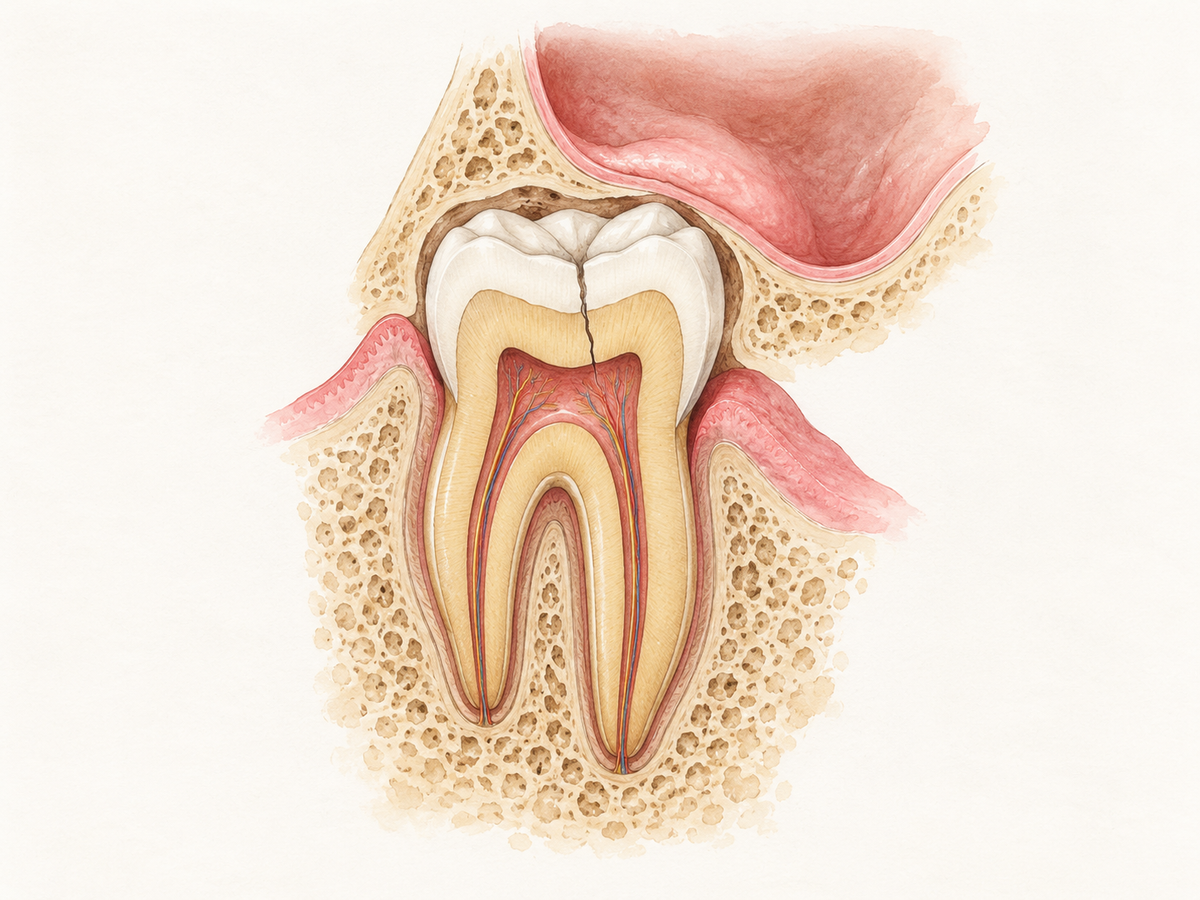
القطعة التي انكسرت غالبًا ما تكون مجرد قمة جبل الجليد. الجير تحت اللثة — الجير الذي يتراكم تحت خط اللثة — يمكن أن يخلق جيوبًا عميقة تزدهر فيها البكتيريا، مما يؤدي إلى تآكل الرباط والعظم الذي يثبت السن في مكانه. عندما تنكسر قطعة مرئية، يمكن أن يكون ذلك تحذيرًا من أن الهياكل الداعمة معرضة للخطر بالفعل.

تظهر الأبحاث بشكل متزايد أن الجير أكثر من مجرد مصيدة للبلاك. لاحظت مراجعة سردية عام 2022 أن حتى جزيئات الجير المعقمة يمكن أن تسبب موت الخلايا في الخلايا الظهارية للفم، مما قد يكسر الحاجز الواقي لجيب اللثة. هذا يعني أن السطح الخشن والمكسر المتبقي بعد انكسار قطعة ليس مجرد إزعاج — بل يعزز بنشاط تدمير الأنسجة بشكل أكبر. إذا كان التهاب دواعم السن قد بدأ بالفعل، يصبح سطح الجذر المكشوف مغناطيسًا لإعادة التراكم، مما يسرع المرض.
بدون تدخل، يمكن أن يؤدي الجير المتبقي تحت اللثة إلى: - استمرار انحسار اللثة - فقدان العظم السنخي وحركة الأسنان - عدوى تصل إلى اللب (تتطلب علاج قناة الجذر) - فقدان الأسنان في النهاية
الخبر السار: اكتشافه الآن، عندما تنكسر قطعة للتو، يمنحك بداية مبكرة. إنه إنذار مبكر يوصلك إلى كرسي طبيب الأسنان قبل حدوث ضرر لا رجعة فيه.
ما يجب فعله الآن (وما لا يجب فعله)
أفعالك الفورية مهمة. إليك كيفية التعامل مع الموقف بأمان:
- اشطف بلطف بماء مالح دافئ (نصف ملعقة صغيرة من الملح في كوب من الماء) للحفاظ على نظافة المنطقة.
- تجنب التحسس للمكان بلسانك أو عود أسنان أو أي أداة. يمكن أن يؤدي النقر إلى إدخال البكتيريا أعمق في جيب اللثة أو كسر الجير المتبقي أكثر.
- لا تحاول أبدًا إزالة المزيد من الجير بظفرك أو أداة تنظيف الأسنان أو أي أداة منزلية. يمكن أن تؤدي إزالة الجير بنفسك إلى تقطيع المينا السليمة، وتسبب جروحًا عميقة، وتدفع البكتيريا إلى مجرى الدم.
- قم بتغطية الحواف الحادة مع شمع أسنان خالٍ من السكر (متوفر في معظم الصيدليات) لحماية لسانك وخدك أثناء انتظار موعدك.
- احجز زيارة لطبيب الأسنان خلال أيام قليلة. السطح الخشن المتبقي هو موطن مثالي لتراكم البلاك السني، لذا فإن التنعيم الاحترافي الفوري أمر ضروري.
في حين لا يمكن لأي فرشاة أسنان إزالة الجير المتصلب، فإن التحول إلى فرشاة أسنان كهربائية صوتية يمكن أن ينظف أسنانك بلطف وفعالية، مما يساعدك على تجنب الفرك الخشن الذي قد يزيل المزيد من الجير أو يهيج اللثة الملتهبة بالفعل.
كيف سيحل طبيب الأسنان هذه المشكلة بأمان
إذا كان التفكير في زيارة طبيب الأسنان يجعلك متوترًا، فاطمئن أن التعامل مع الجير المكسور هو إجراء روتيني ومفهوم جيدًا. العملية لطيفة ومتوقعة وأكثر راحة بكثير من التعامل مع عواقب الإهمال.
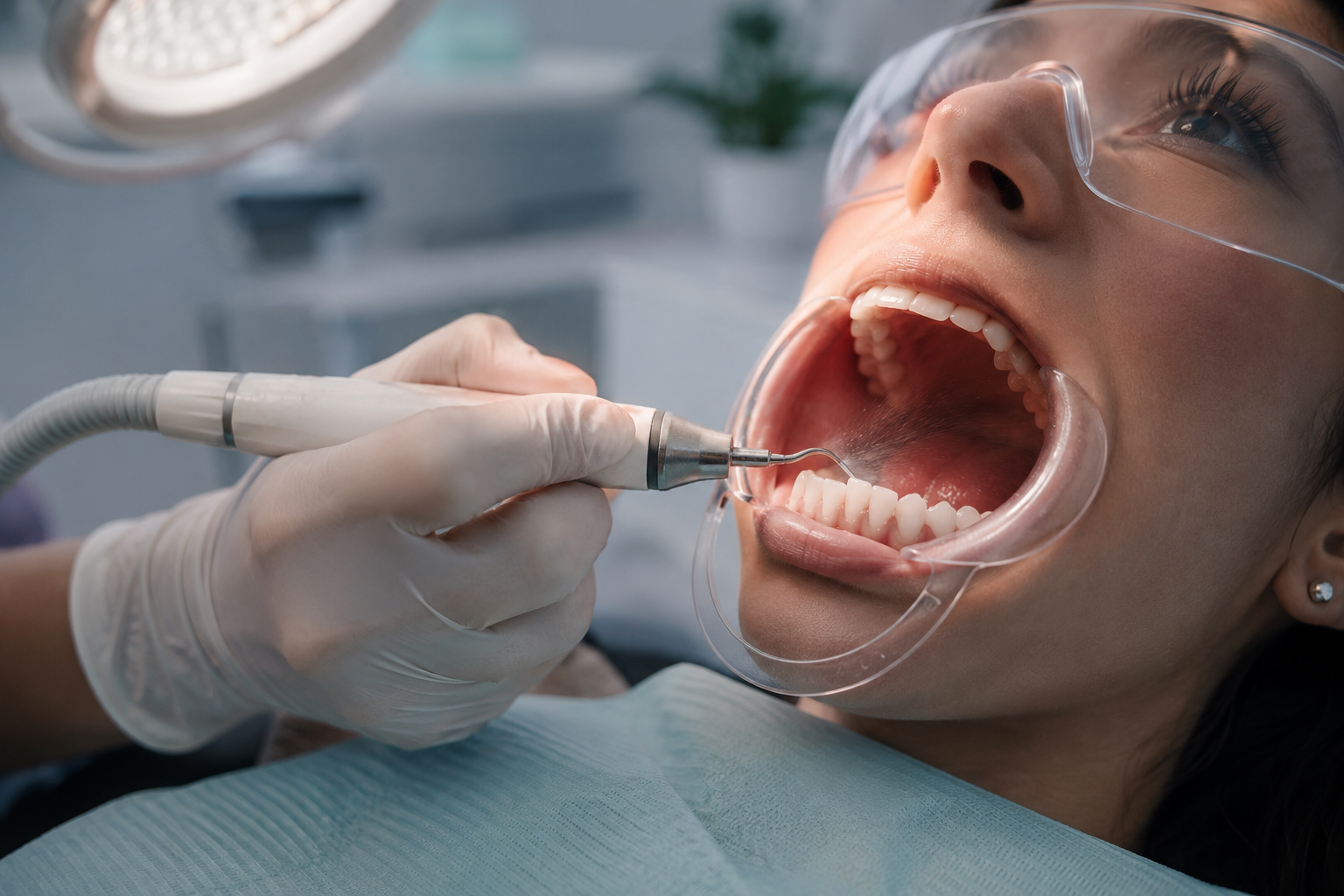
خلال موعدك، سيقوم طبيب الأسنان أو أخصائي النظافة بما يلي: - فحص المنطقة بمسبار اللثة وربما أخذ أشعة سينية لتقييم المدى الكامل للجير تحت خط اللثة والتحقق من فقدان العظام - إزالة الجير المتبقي فوق اللثة وتحت اللثة باستخدام أجهزة إزالة الجير بالموجات فوق الصوتية والأدوات اليدوية — وهذا هو التنظيف الاحترافي للأسنان (إزالة الجير) الذي يعيد سطح الأسنان الناعم والنظيف - علاج أي تسوس أو جيوب لثوية قد تكون مخفية تحت الجير - تلميع السن لإبطاء تراكم البلاك في المستقبل
وفقًا للإرشادات السريرية الممارسة، إزالة الجير وتنعيم الجذور (SRP) هي العلاج الأولي القياسي الذهبي لالتهاب دواعم الأسنان، وتتحكم بشكل فعال في الالتهاب وتوقف تقدم المرض. عندما تعالج المشكلة مبكرًا، يكون العلاج غالبًا سريعًا وبأقل تدخل جراحي ومغطى بمعظم خطط التأمين على الأسنان.
بعيدًا عن كونه حدثًا مخيفًا، كانت قطعة الجير المكسورة تلك هي طريقة سنك لتنبيهك — قبل أن تتحول مشكلة بسيطة إلى مشكلة كبيرة. من خلال أخذها على محمل الجد الآن، فأنت تختار حماية ابتسامتك بإصلاح احترافي سريع يمنع الألم والعدوى وفقدان الأسنان في المستقبل.





اترك تعليقًا
This site is protected by hCaptcha and the hCaptcha Privacy Policy and Terms of Service apply.