
باختصار: لا يؤدي التدخين إلى اصفرار الأسنان فحسب، بل إنه يحرم اللثة من الأكسجين، ويآكل بصمت العظم الذي يثبت الأسنان في مكانها، ويرفع بشكل كبير خطر الإصابة بسرطان الفم المميت. الجزء الأكثر تفاؤلاً؟ يمكن إيقاف الضرر وعكس الكثير منه عند الإقلاع عن التدخين، بدءًا بزيارة طبيب الأسنان واتباع روتين عناية منزلية أقوى.

يلاحظ معظم المدخنين ذلك أثناء تنظيف أسنانهم بالفرشاة في الصباح: طبقة صفراء-بنية باهتة لا تزول بالفرك، وأسنان تشعر بأنها خشنة أو غير ناعمة تقريبًا، وطعم عفن مستمر. غالبًا ما تسبب هذه التغيرات المرئية إحراجًا عميقًا - الرغبة في إخفاء ابتسامتك، والانحراف بعيدًا في الصور. لكن هذا التغير في اللون ليس مجرد إزعاج تجميلي. إنها العلامة الخارجية الأولى لسلسلة من الضرر داخل فمك، إذا تُركت دون علاج، يمكن أن تؤدي إلى فقدان الأسنان ومرض يهدد الحياة.
البقع التي تراها - وتلك التي تمهد الطريق لما هو أسوأ
اللون الأصفر-البني الكلاسيكي لـ أسنان المدخن ينتج عن القطران و النيكوتينالقطران، وهو المادة اللزجة المتبقية من حرق التبغ، يغطي سطح السن فورًا ويمتص بسرعة في المسام المجهرية للمينا. النيكوتين، على الرغم من كونه عديم اللون عندما يكون طازجًا، يتأكسد عند ملامسته للهواء ويتحول إلى صبغة بنية داكنة عنيدة ترتبط كيميائيًا بتلك المسام نفسها في المينا.
بمرور الوقت، يخلق هذا المزيج بقعًا خارجية تتصلب إلى جير داكن وخشن (قلح) على طول خط اللثة وبين الأسنان - خاصة على جانب اللسان من الأسنان الأمامية السفلية وجانب الخد من الأضراس العلوية. غالبًا ما يلاحظ المدخنون أن سطح أسنانهم يشعر بخشونة دائمة، بغض النظر عن مدة تنظيفهم بالفرشاة. هذا الملمس هو الجير، الذي يعمل مثل المغناطيس لجذب المزيد من البقع واللويحات، ولا يمكن إزالته في المنزل.
بعيدًا عن اللون، هناك رائحة النفس. رائحة الفم الكريهة عند المدخنين هي نتيجة مباشرة لجزيئات الدخان، ومركبات الكبريت، وفرط نمو البكتيريا المسببة للرائحة التي تزدهر في البيئة الجافة المليئة باللويحات التي يخلقها التبغ. حتى النعناع وغسول الفم يخفيان المشكلة لدقائق فقط.
المعركة اليومية ضد هذه البقع السطحية تبدو مرهقة، لكن الأدوات الصحيحة مهمة. بينما تكافح الفرشاة اليدوية غالبًا للوصول إلى الزوايا التي يستقر فيها القطران، فإن فرشاة الأسنان الكهربائية بحركتها عالية التردد للتنظيف يمكنها بشكل أكثر فعالية تفكيك وكنس اللويحات المسببة للبقع قبل أن تتكلس - مما يمنحك فرصة حقيقية ضد هذا التغير اليومي في اللون.
الضرر الخفي: عندما تتوقف لثتك عن تحذيرك
تحت تلك البقع المرئية، يدير التدخين عملية صامتة وأكثر خطورة بكثير. إليك الجزء الذي لا يعرفه معظم المدخنين - وهو يمكن أن ينقذ أسنانهم.
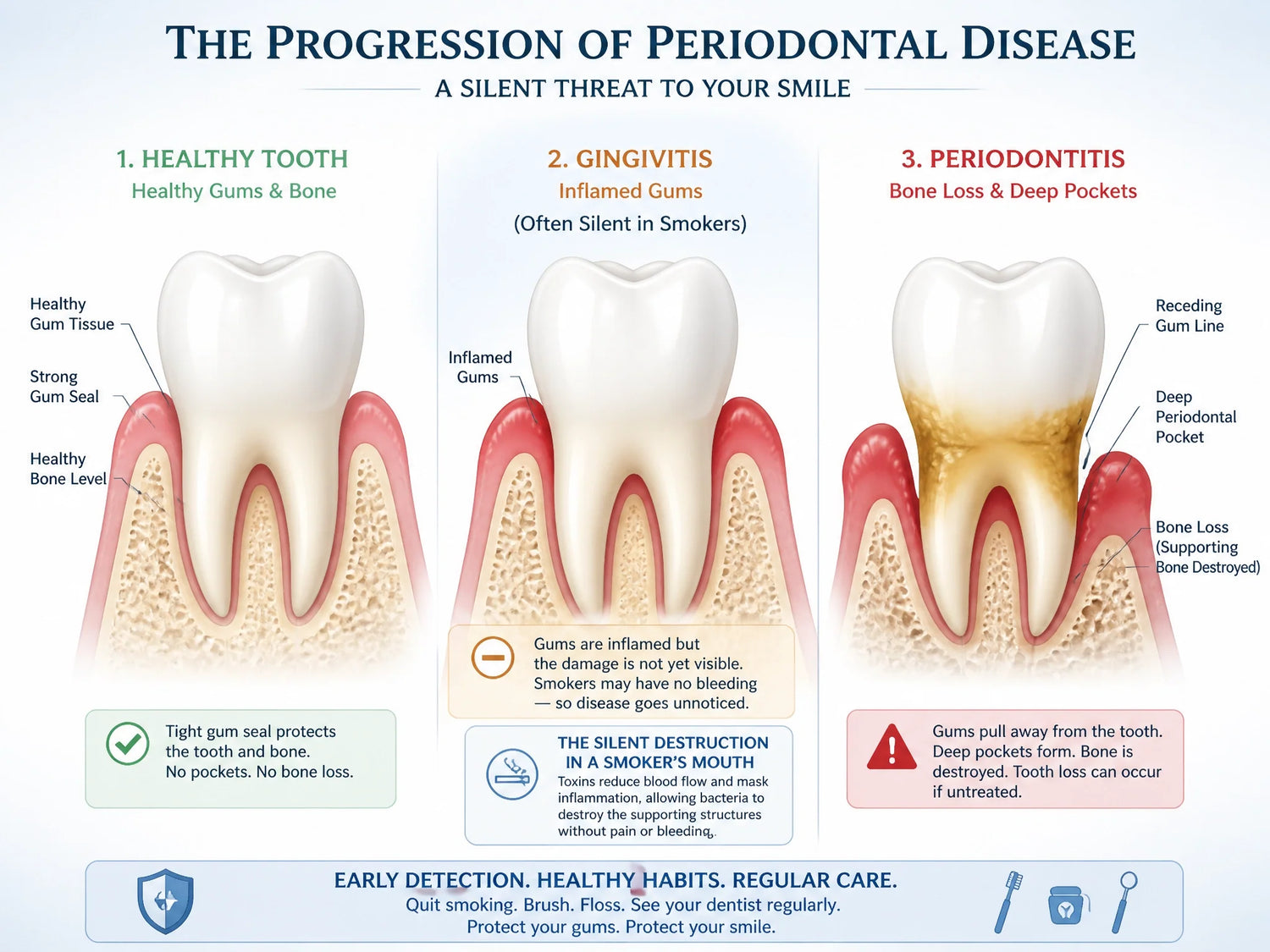
اللثة الصحية تنزف عندما تلتهب. هذا النزيف هو علامة تحذير حمراء، إنذار مبكر على أن التهاب اللثة (التهاب اللثة) موجود. لكن النيكوتين يضيق الأوعية الدموية في جميع أنحاء الجسم، بما في ذلك الشعيرات الدموية الدقيقة في لثتك. هذا التضيق الوعائي يحرم أنسجة اللثة من الأكسجين والمواد المغذية الأساسية - و يخفي النزيف الذي يشير عادة إلى وجود مشكلة.
ونتيجة لذلك، مرض اللثة يتقدم دون ألم. وجدت دراسة جماعية وطنية تابعت آلاف البالغين في الولايات المتحدة أن المدخنين الحاليين للسجائر لديهم خطر أعلى بنسبة 33% لتشخيص إصابتهم بأمراض اللثة وخطر أعلى بنسبة 35% لتطور ارتخاء الأسنان مقارنة بغير المدخنين. والأرقام أكثر إثارة للقلق بالنسبة لفقدان الأسنان: تُظهر بيانات NHANES أن المدخنين الحاليين هم أكثر عرضة لخسارة الأسنان بأكثر من الضعف، حيث يبلغ معدل انتشار فقدان الأسنان 17.5% مقارنة بأقل من 7% بين غير المدخنين أبدًا.
يتكشف الضرر ببطء:
- يتم تدمير الألياف التي تثبت الأسنان في العظم (الرباط اللثوي).
- ينكمش العظم السنخي الذي يدعم الجذور، مما يخلق جيوبًا عميقة تحبس المزيد من البكتيريا.
- تنحسر اللثة تدريجيًا، مما يكشف عن أسطح جذور داكنة تكون أنعم من المينا وعرضة بشدة للتسوس (تسوس الجذور).
- في النهاية، ترتخي الأسنان وقد تحتاج إلى خلعها — غالبًا دون أي ألم نابض إلا في النهاية.
نظرًا لأن المدخنين نادرًا ما يرون دمًا على خيط الأسنان أو فرشاة أسنانهم، فإنهم ينخدعون بشعور زائف بالأمان. وفي الوقت نفسه، يقوم المرض بتفكيك أساس كل سن بصمت.
هنا تصبح تقنية تنظيفك بالفرشاة تعويضية بشكل حاسم. لأن التدخين يخفي النزيف الدال، لا يمكنك الاعتماد على الألم لمعرفة ما إذا كنت تنظف جيدًا بما فيه الكفاية. فرشاة الأسنان الكهربائية — خاصة تلك المزودة بمستشعر ضغط ووضع العناية باللثة — تساعد في تقديم تنظيف ثابت وبمستوى احترافي على طول خط اللثة، وإزالة الغشاء الحيوي البكتيري الذي يغذي التهاب دواعم الأسنان حتى عندما لا ترسل لثتك أي إشارات ألم.

العلاقة بالسرطان: ماذا يعني ذلك القرح حقًا
إنه السيناريو الأسوأ الذي يأمل كل مدخن في تجنبه، لكن يجب أن يعرفه. التبغ هو السبب الرئيسي لـ سرطان الفم، وهو مرض يقتل أكثر من 175,000 شخص عالميًا كل عام.
مراجعة منهجية وتحليل تلوي لعشرات الآلاف من المرضى أكدت أن مستخدمي التبغ — سواء كانوا يدخنون السجائر أو يمضغون التبغ — لديهم احتمالات أعلى بشكل كبير للإصابة بالأورام الخبيثة والآفات السابقة للتسرطن في الفم. المواد الكيميائية المسببة للسرطان في دخان التبغ، خاصة النتروزامينات الخاصة بالتبغ (TSNAs)، ترتبط مباشرة بالحمض النووي (DNA) في الخلايا المبطنة لفمك، مكونة تركيبات يمكن أن تؤدي إلى نمو خلايا غير منضبط.
والخطر لا يقتصر على المدخنين الشرهين طويلي الأمد. حتى التدخين العرضي أو الاجتماعي يعرض أنسجة الفم لنفس المواد المسرطنة، ويزداد الخطر مع كل سيجارة.
غالبًا ما تكون العلامات المبكرة لسرطان الفم غير مؤلمة ويتم التغاضي عنها بسهولة — وهذا ما يجعلها مميتة. انتبه إلى:
- قرحة أو تآكل في الفم أو على الشفة لا يلتئم خلال أسبوعين
- بقعة بيضاء (طلاوة فموية) أو بقعة حمراء (حمامى حمراء) على اللثة أو اللسان أو بطانة الخد
- كتلة أو سماكة في أي مكان في الفم أو الرقبة
- صعوبة في المضغ أو البلع أو التحدث
- تنميل في اللسان أو الفم
إذا لاحظت أيًا من هذه الأعراض، فاستشر طبيب الأسنان أو الطبيب فورًا. الاكتشاف المبكر يرفع معدلات البقاء على قيد الحياة فوق 80٪.
من المهم أيضًا أن تعلم أن أشكال التبغ الأخرى ليست أكثر أمانًا. فالسجائر والغليون وحتى المنتجات الخالية من الدخان مثل السنوس تحمل مخاطر سرطان الفم الخاصة بها ويمكن أن تسبب التهاب الفم النيكوتيني (مظهر أبيض مرصوف بالحصى على الحنك) و تصبغ المدخن الميلانيني (بقع داكنة على اللثة).
طريقك إلى التعافي: خطة تبدأ اليوم
إذا كان ما قرأته يبدو ثقيلاً، فاستوعب هذا: الفم لديه قدرة استثنائية على الشفاء بمجرد إزالة مصدر الضرر. طريقك إلى ابتسامة أكثر صحة يبدأ بأربع خطوات واضحة.
-
حدد موعدًا لفحص أسنان شامل.
سيقوم طبيب أسنانك بقياس أعماق جيوب اللثة، والتحقق من الآفات المشبوهة، وأخذ أشعة سينية لرؤية فقدان العظم الذي لا يمكنك الشعور به. هذا الفحص يحدد خط الأساس لديك ويكتشف أي شيء مقلق مبكرًا. -
أزل القطران والجير الذي لا يمكن للعناية المنزلية الوصول إليه.
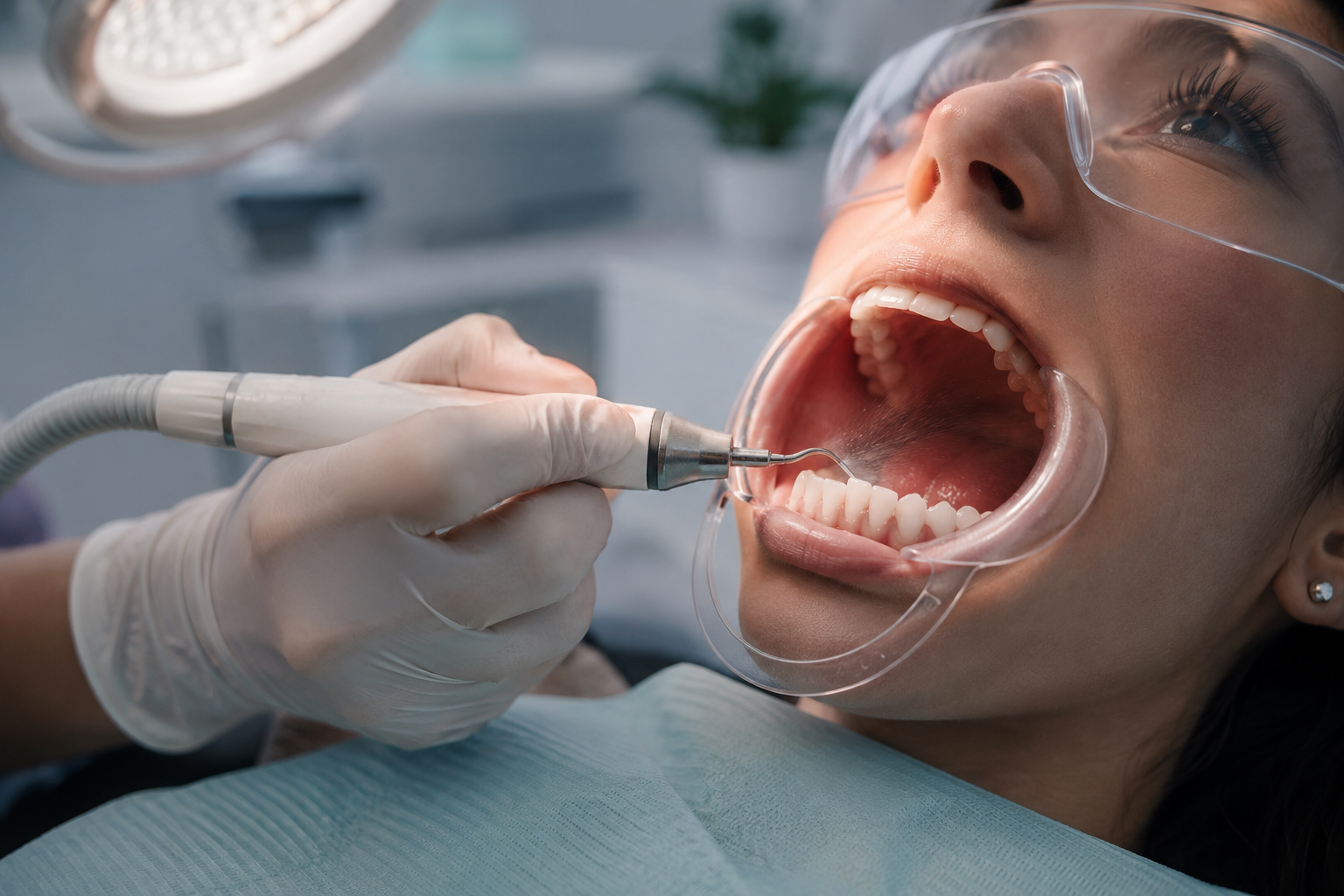
التنظيف الاحترافي للأسنان (إزالة القلح) سيزيل سنوات من البقع الصلبة والجير. بالنسبة للبقع الخارجية العنيدة، يمكن لعلاج “تدفق الهواء” أو التقشير الدقيق أن يزيل التغير اللوني بلطف دون الإضرار بالمينا. تجنب معاجين التبييض الكاشطة التي لا تستلزم وصفة طبية — فهي لن تخترق بقع القطران العميقة وقد تزيد الحساسية. -
أقلع عن التدخين — ولا تفعل ذلك وحدك.
هذا هو أقوى إجراء يمكنك اتخاذه لفمك وحياتك. الأدلة مذهلة: أظهر تحليل تلوي للدراسات المستقبلية أن الأشخاص الذين أقلعوا عن التدخين خفضوا خطر الإصابة بالتهاب دواعم الأسنان إلى نفس المستوى تقريبًا مثل غير المدخنين، وعلى مدى الـ 12 إلى 24 شهرًا التالية، اكتسبوا ارتباطًا أكبر بشكل ملحوظ (الألياف التي تمسك الأسنان) وجيوبًا أقل عمقًا بعد العلاج مقارنة بمن استمروا في التدخين. الأدوات المجانية مثل خط الإقلاع الوطني (1-800-QUIT-NOW) وتطبيقات الإقلاع عن التدخين يمكن أن تضاعف فرص نجاحك. -
حافظ على العادات المدعومة علميًا.
بمجرد أن تقلع عن التدخين، التزم بغسول فم مضاد للبكتيريا خالٍ من الكحول، ونظف أسنانك بلطف مرتين يوميًا بمعجون أسنان يحتوي على الفلورايد، و نظف بين أسنانك يوميًا. عد لإجراءات الصيانة الدورية للثة كل 3 إلى 4 أشهر — تحتاج لثتك إلى دعم احترافي أكثر تكرارًا للبقاء ثابتة.
كيف يبدو التحسن؟ نزيف اللثة أثناء التنظيف بالفرشاة — وهو علامة صحية على عودة الدورة الدموية — غالبًا ما يظهر مرة أخرى خلال 2 إلى 12 أسبوعًا من الإقلاع. يتراجع الالتهاب بشكل ملحوظ، وتصبح الأسنان أكثر نعومة، وينتعش النفس. على مدى أشهر إلى سنوات، ينخفض خطر فقدان الأسنان الكارثي بشكل كبير.
إذا استمرت بقعك بعد الإقلاع، يمكن أن يؤدي تبييض الأسنان الاحترافي في العيادة إلى تفتيح حتى تلون الأسنان العميق بأمان تحت إشراف طبيب الأسنان. وبالنسبة للأسنان المفقودة بالفعل، فإن خيارات الزرع والجسور اليوم أكثر قابلية للتنبؤ في فم خالٍ من التدخين.
لا يجب أن تكون المرآة عدوك. يمكن أن تصبح دليلك على أن التغيير حقيقي. الوصمة الصفراء-البنية، والملمس الخشن، والخوف من آفة خفية — كلها يمكن أن تبدأ في الانعكاس بقرار واحد. احجز موعد طبيب الأسنان هذا الأسبوع. أسنانك جاهزة لفرصة ثانية.




اترك تعليقًا
This site is protected by hCaptcha and the hCaptcha Privacy Policy and Terms of Service apply.