
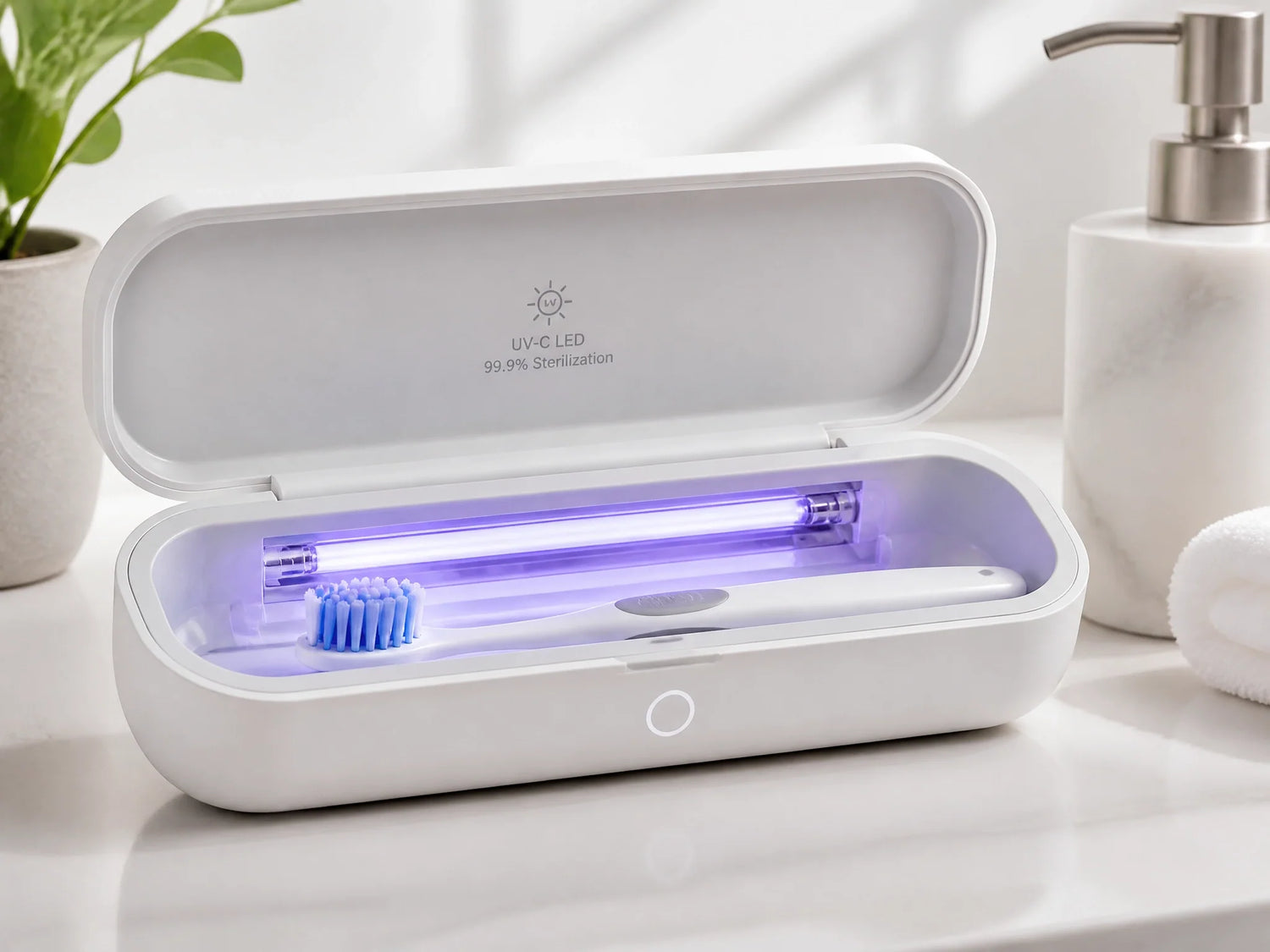
خلاصة سريعة — جهاز تعقيم فرشاة الأسنان بالأشعة فوق البنفسجية الجيد يفعل أكثر من مجرد تسليط الضوء. يجب أن يستخدم ضوء UV-C الأصلي بطول موجة صحيح، ويقتل 99.9٪ من الجراثيم، ويجفف فرشاتك بنشاط حتى لا تعود البكتيريا. يقارن هذا الدليل الميزات المهمة فعليًا لتختار نظافة خالية من الجراثيم تدوم.
ما هو معقم فرشاة الأسنان بالأشعة فوق البنفسجية وكيف يقتل الجراثيم؟
معقم فرشاة الأسنان بالأشعة فوق البنفسجية هو حجرة صغيرة تستخدم ضوءًا فوق بنفسجيًا لتعطيل البكتيريا والفيروسات والعفن على رأس الفرشاة. أفضل الأنواع تجمع بين الضوء والتجفيف النشط لمنع التلوث مرة أخرى.
علم تعقيم ضوء UV-C
تأتي قوة التعقيم من ضوء UV-C — تحديدًا بطول موجة يبلغ 253.7 نانومتر — وهو نفس النطاق المبيد للجراثيم المستخدم لتطهير أدوات المستشفيات ومياه الشرب. عند هذا الطول الموجي، تخترق طاقة UV-C جدران الخلايا الميكروبية وتشوش حمضها النووي بحيث لا يمكنها التكاثر. إليك كيف يعمل في جهاز نموذجي، خطوة بخطوة:
- تضع فرشاة أسنان مشطوفة داخل الحجرة المغلقة.
- تغمر مصابيح UV-C LED أو مصباح خالٍ من الزئبق الشعيرات من زوايا متعددة.
- تعطل طاقة الضوء الحمض النووي لـ مسببات الأمراض الفموية مثل الإشريكية القولونية, والمكورات العنقودية الذهبيةو العقدية الطافرة.
- بعد دورة كاملة — عادة من 3 إلى 10 دقائق — ينخفض الحمل الميكروبي بنسبة 99.9٪، محققًا تعقيمًا عالي المستوى (وليس تعقيمًا كاملًا، لكنه أكثر من كافٍ للنظافة اليومية).
لماذا وظيفة التجفيف غير قابلة للتفاوض
تزدهر البكتيريا في الرطوبة. إذا بقيت فرشاتك مبللة بعد دورة UV، يمكن للميكروبات الباقية أن تتضاعف في العدد كل 20 دقيقة. لهذا السبب فإن مروحة مدمجة أو مجفف هواء دافئ ضروري: فهو يزيل البيئة الرطبة التي تسمح للجراثيم بالنمو مرة أخرى. يستخدم معقم PhoneSoap مروحة لتجفيف الشعيرات بعد كل دورة، مما يمنع مشكلة "الشعيرات الرطبة" التي تحول الفرشاة النظيفة إلى أرض خصبة. قارن ذلك بالتجفيف السلبي بالهواء:
| الطريقة | كيف تعمل | نافذة الحماية |
|---|---|---|
| التجفيف السلبي بالهواء (بدون مروحة) | تبقى الفرشاة في الهواء الطلق أو في علبة محكمة الإغلاق بدون تدفق هواء | يمكن للبكتيريا أن تعود للانتشار خلال ساعات |
| التجفيف النشط بالمروحة | مروحة مدمجة تدير الهواء عبر الحجرة | يبقي الشعيرات جافة ومستويات الجراثيم منخفضة لأكثر من 24 ساعة |
| التجفيف بالهواء الساخن (45–60 درجة مئوية) | عنصر تسخين لطيف يبخر الرطوبة | يوفر أطول حماية ضد عودة النمو |

لماذا تحتاج إلى معقم فرشاة أسنان بالأشعة فوق البنفسجية في حمامك
الجراثيم غير المرئية التي تعيش على فرشاة أسنانك
فرشاة أسنانك مغناطيس للبكتيريا المنقولة بالحمام. كل تدفق للمرحاض يطلق عمودًا من الجزيئات الهبائية - بما في ذلك القولونيات البرازية - في الهواء. تستقر هذه الجزيئات على فرشاتك. تظهر الاختبارات المعملية المستقلة أن ضوء الأشعة فوق البنفسجية-C يمكن أن يقضي على 99.9% من بكتيريا الإشريكية القولونية، وهي بالضبط نوع البكتيريا التي تلتقطها فرشاة أسنان الحمام.
حقيقة مذهلة: يمكن لتدفق واحد من المرحاض نشر البكتيريا حتى ستة أقدام، وفرشاة أسنان رطبة مخزنة بشكل مكشوف يمكن أن تؤوي ملايين الكائنات الحية الدقيقة - بما في ذلك تلك المرتبطة بأمراض اللثة واضطرابات المعدة.
من موسم الإنفلونزا إلى الأماكن المشتركة: فوائد يومية ملموسة
المعقم ليس مجرد أداة - إنه درع عملي لصحة أسرتك. إليك متى يستحق مكانته:
- بعد نزلة برد أو إنفلونزا: يمنعك من إعادة إصابة نفسك في كل مرة تنظف فيها أسنانك.
- حمامات الأسرة: يمنع التلوث المتبادل عندما توضع عدة فرش في حامل واحد.
- التقويم والمثبتات وصواني التبييض: يحافظ على أجهزة تقويم الأسنان من أن تصبح فندقًا للبكتيريا.
- ضعف جهاز المناعة: يضيف طبقة دفاع خالية من المواد الكيميائية لأي شخص لديه صحة معرضة للخطر.
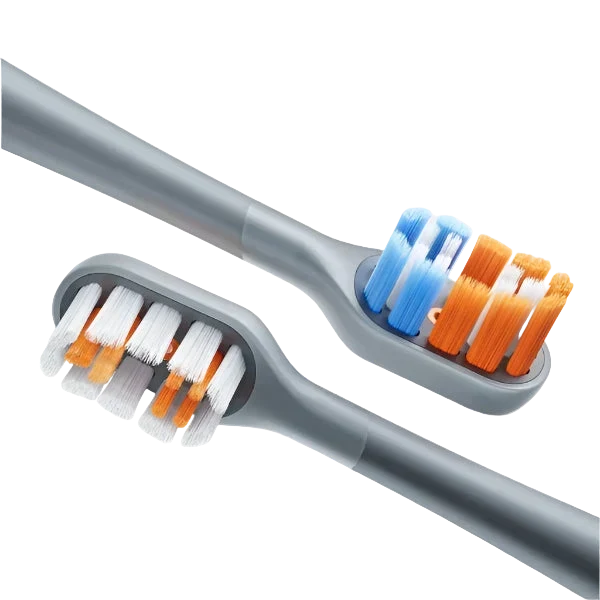
- اللثة الحساسة والنزيف: إذا كنت قلقًا بشأن تلف اللثة، قم بإقران معقم الأشعة فوق البنفسجية الخاص بك بفرشاة لطيفة فرشاة أسنان كهربائية مثل RANVOO AirJet X5. تستخدم تقنية فقاعات الفرشاة الحاصلة على براءة اختراع فقاعات دقيقة لتنظيف البلاك دون فرك قاسٍ، مما يجعلها مثالية للأفواه الحساسة. مع معقم الأشعة فوق البنفسجية، تحصل على رأس فرشاة خالٍ من الجراثيم وتنظيف غير مهيج في كل مرة.
كيف تقارن وتختار معقم فرشاة الأسنان بالأشعة فوق البنفسجية المناسب لك
تقنية التجفيف: مروحة، حرارة، أم توصيل حراري؟
التجفيف النشط يأتي بأنواع مختلفة. الاختيار الصحيح يوازن بين السرعة والضوضاء والفعالية.
| النوع | سرعة التجفيف | مستوى الضوضاء | استهلاك الطاقة | مثال |
|---|---|---|---|---|
| مروحة فقط | سريع (30–60 دقيقة) | همهمة منخفضة | منخفض | PhoneSoap |
| هواء ساخن (45–60 درجة مئوية) | معتدل (60–90 دقيقة) | شبه صامت | متوسط | OrellaUV FamilyGuard |
| توصيل حراري / مادة مجففة | بطيء (عدة ساعات) | صامت | لا شيء | بعض الموديلات الاقتصادية |
جودة مصباح الأشعة فوق البنفسجية-سي، التغطية، وعمر الافتراضي
ليست كل الأشعة فوق البنفسجية-سي متساوية. ابحث عن هذه المواصفات لتجنب الأداء الضعيف:
- LED مقابل مصباح زئبقي: تدوم مصابيح LED من 5,000 إلى 10,000 ساعة، ولا تحتوي على زئبق، وتصل إلى أقصى كثافة فورًا.
- مواصفات الطول الموجي: يجب أن يذكر الجهاز بوضوح 253.7 نانومتر (أو نطاقًا ضمن 254-280 نانومتر). إذا لم يُذكر، فقد تكون قوة التعقيم غير موثوقة.
- غرفة عاكسة: يعكس الجزء الداخلي المصقول أو المصنوع من الفولاذ المقاوم للصدأ الضوء في زوايا الشعيرات.
- مدة التعرض: يجب أن تستمر الدورات لمدة 3 دقائق على الأقل لضمان تقليل عالي للسلالات الميكروبية.
السعة والتوافق مع فرش الأسنان
حدد عدد الفرش التي ستقوم بتعقيمها يوميًا. تعمل النماذج ذات الفتحة الواحدة بشكل رائع لشخص واحد أو شخصين وللسفر. تستوعب وحدات العائلة من 4 إلى 5 فرش وغالبًا ما تتضمن أنظمة تجفيف أكبر. معظم أجهزة التعقيم عالية الجودة تقبل:
- فرش الأسنان اليدوية (جميع الأحجام)
- رؤوس فرش الأسنان الكهربائية الصوتية (بما في ذلك Philips Sonicare ورؤوس فقاعات RANVOO AirJet X5، التي يتناسب تصميمها الناعم بسهولة مع الغرف القياسية)
- فرش أسنان الأطفال
- أجهزة تقويم الأسنان القابلة للإزالة وواقيات الفم الصغيرة
ملاحظة: قد لا تتناسب بعض رؤوس Oral-B الكهربائية المستديرة مع الفتحات الضيقة — تحقق دائمًا من عمق الغرفة وعرضها.
مصدر الطاقة ومرونة التنسيب
| نوع الطاقة | الإيجابيات | السلبيات |
|---|---|---|
| قابل لإعادة الشحن عبر USB (بطارية مدمجة) | قابل للحمل، مناسب للمستأجرين، بدون أسلاك | يجب إعادة الشحن بشكل دوري (عادة مرة في الشهر) |
| يعمل بالبطاريات (AA/AAA) | بدون أسلاك حقًا، سهولة الاستبدال | تكلفة البطاريات المستمرة، قد يكون أكبر حجمًا |
| مثبت على الحائط بلاصق | بدون حفر، يوفر مساحة على المنضدة | يحتاج إلى سطح أملس، أقل قابلية للحمل |
| موصل بالكهرباء مباشرة | مزود بالطاقة دائمًا، لا قلق من البطاريات | يتطلب تركيبًا احترافيًا |
ميزات السلامة والذكاء الضرورية
- إيقاف تشغيل تلقائي عند فتح الغطاء: يُطفئ ضوء الأشعة فوق البنفسجية فورًا لحماية العينين والجلد.
- مصابيح LED خالية من الزئبق: أكثر أمانًا لمنزلك والبيئة.
- قفل أمان للأطفال أو غطاء محكم: يمنع الفتح العرضي أثناء الدورة.
- مؤشرات حالة الدورة: ضوء أو شاشة بسيطة تخبرك عند الانتهاء.
السعر مقابل القيمة طويلة الأمد
- الميزانية ($20–$40): ضوء UV أساسي، أحيانًا بدون تجفيف أو بمروحة بسيطة. مناسب للاستخدام الفردي إذا قمت بتجفيف الفرشاة يدويًا أولاً.
- الفئة المتوسطة ($40–$80): LED UV-C موثوق، تجفيف بمروحة نشطة، سعة متعددة الفرش، قابل للشحن عبر USB. الخيار الأمثل لمعظم العائلات.
- الفئة الممتازة ($80+): تجفيف بالهواء الساخن، حجرة من الفولاذ المقاوم للصدأ، غطاء بمستشعر حركة، بطارية تدوم لشهر. أنت تدفع مقابل حماية طويلة الأمد بدون صيانة.
معقمات فرش الأسنان بالأشعة فوق البنفسجية الشخصية مقابل العائلية: أيهما يناسب نمط حياتك؟
أفضل الخيارات للأفراد أو الأزواج
تتناسب المعقمات المدمجة والقابلة للحمل بسهولة في حقيبة السفر كما توضع على السطح. ابحث عن: - يتسع لفرشاة واحدة، وأحيانًا اثنتين - يعمل أيضًا كعلبة سفر (بغطاء محكم) - بطارية قابلة للشحن مع 25+ دورة لكل شحنة - مثال بارز: PhoneSoap يستخدم المعقم حاملًا جداريًا مغناطيسيًا ويشغّل 28 دورة تعقيم وتجفيف بشحنة واحدة مدتها 80 دقيقة — لا حاجة لمنفذ طاقة في وجهتك.
الحلول الأعلى تقييمًا للعائلات ذات الفرش المتعددة
للأسر، السعة وقوة التجفيف تأتي أولاً. يمكن للوحدة المثبتة على الحائط التي تسع 5 فرش مع تجفيف بالهواء الساخن القضاء على مشكلة تلوث الحامل المشترك تمامًا. على سبيل المثال، OrellaUV FamilyGuardيستخدم حجرة من الفولاذ المقاوم للصدأ بدرجة الطعام، أشعة UV-C بطول موجة 253.7 نانومتر، وهواء ساخن بدرجة 45–60 درجة مئوية لإبقاء كل فرشاة جافة وخالية من الجراثيم بين الاستخدامات — وكل ذلك يتم التحكم فيه بمستشعر حركة حتى لا ينسى الأطفال تشغيله.
أين تثبت معقم فرش الأسنان بالأشعة فوق البنفسجية لتحقيق النظافة المثلى؟
مثبت على الحائط، على السطح، أو علبة سفر: دليل التنسيب
| نوع التركيب | الأفضل لـ |
|---|---|
| يُثبَّت على الحائط باستخدام لاصق أو براغي | العائلات، مساحة سطح محدودة، إعداد دائم |
| حامل طاولة | المستأجرون، سهولة الوصول، لا ضرر على الحائط |
| حقيبة سفر | المتنقلون، المسافرون المتكررون، حقائب الجيم |
نصائح التركيب لإعداد آمن وفعّال
- قم بتركيب المعقّم على بُعد 4 أقدام على الأقل من المرحاض لتقليل ملامسة الهباء الجوي.
- ضعه على جدار جاف بعيدًا عن رذاذ الحوض المباشر — يمكن أن تتداخل الرطوبة مع الإلكترونيات.
- إذا كنت تستخدم حاملًا لاصقًا، فنظّف السطح جيدًا بالكحول وانتظر 24 ساعة قبل التعليق.
- تأكد من عدم انسداد فتحات التهوية؛ فتدفق الهواء المناسب يحافظ على كفاءة التجفيف.
متى وكم من الوقت لتشغيل دورة التعقيم
الروتين اليومي والمحفزات الظرفية للتعقيم
- بعد كل جلسة تنظيف بالأسنان: العادة المثالية؛ تنتهي معظم الدورات في 5-10 دقائق.
- عندما يكون شخص في المنزل مريضًا: قم بتشغيل دورة كاملة بعد كل استخدام لمنع انتشار الجراثيم.
- بعد التنظيف العميق لفرشاتك: إذا قمت بنقعها في غسول فم أو بيروكسيد، فإن دورة الأشعة فوق البنفسجية تضيف طبقة إضافية من الأمان.
- قبل تخزين فرشاة السفر: عقّمها وجففها قبل وضعها في الحقيبة.
فهم مدة الدورة وتنبيهات الصيانة
تستمر الدورة القياسية من 5 إلى 10 دقائق (بعض الطرز السريعة في 3 دقائق). الصيانة ضئيلة: - أسبوعيًا: امسح الجزء الداخلي للحجرة بقطعة قماش ناعمة. - شهريًا: افحص مؤشر LED أو المصباح بحثًا عن التعتيم؛ استبدله إذا أشار المؤشر إلى أن الوقت قد حان (عادة بعد 5000+ ساعة لمصابيح LED). - كل 3-4 أشهر: استبدل رأس فرشاة الأسنان، حتى لو كنت تعقّم يوميًا. الشعيرات البالية لا تنظف الأسنان بفعالية.
المواجهة النهائية: مقارنة مباشرة بين أفضل معقمات فرش الأسنان بالأشعة فوق البنفسجية
| الموديل | قتل الجراثيم | طريقة التجفيف | السعة | الطاقة | الأفضل لـ | الإيجابيات | السلبيات |
|---|---|---|---|---|---|---|---|
| PhoneSoap BrushGuard | 99.9% (مختبر ضد الإشريكية القولونية) | مروحة مدمجة | فرشاة واحدة | قابلة للشحن عبر USB (28 دورة لكل شحنة) | المستخدمون الفرديون والسفر | تعمل كحقيبة سفر، حامل حائط مغناطيسي، بدون أزرار | سعة فرشاة واحدة؛ لا يوجد هواء ساخن |
| OrellaUV FamilyGuard | 99.9% (253.7 نانومتر UV-C) | هواء ساخن 45-60 درجة مئوية | 5 فرش | بطارية 4000mAh، USB-C (حوالي شهر) | العائلات والحمامات المشتركة | التجفيف بالهواء الساخن يمنع إعادة النمو، حجرة من الفولاذ المقاوم للصدأ | غير محمول؛ قد لا تناسب الرؤوس المستديرة من Oral-B |
| LifeBasis Pro | 99.9% (UV-C + UV-A مزدوج) | هواء ساخن 60 درجة مئوية + مروحة | حتى 6 عناصر | بطارية قابلة للشحن 5100mAh | منازل ذكية عالية السعة | مستشعر الأشعة تحت الحمراء للفتح التلقائي، شاشة ذكية، تركيب لاصق | يتطلب سطح جدار أملس؛ سعر مرتفع |
| تا كليان جيرم شيلد | 99.9% (UV-C LED) | تجفيف بتدفق الهواء | فرشاة واحدة | بطاريتان AA | المسافرون وعشاق البساطة | صغير جدًا وقابل للحمل، بدون مواد كيميائية، يعمل تلقائيًا | لا يوجد هواء ساخن؛ البطاريات تحتاج إلى استبدال |

يتميز كل موديل في سيناريو مختلف. لمعظم الأسر، يوفر معقم متعدد الفرش مع تجفيف حقيقي بالهواء الساخن الحماية الأكثر اكتمالًا. إذا كنت تسافر كثيرًا، فإن حقيبة مدمجة مع تجفيف مروحي ستحافظ على فرشاتك آمنة دون إثقال حملك. ولأولئك الذين يعانون من حساسية اللثة، فإن إقران المعقم الذي اخترته مع فرشاة لطيفة مثل RANVOO AirJet X5 يضمن أن تكون روتينك اليومي صحيًا ومريحًا — بدون فرك قاسٍ، فقط حماية نظيفة من البكتيريا والتهيج على حد سواء. من خلال إعطاء الأولوية لطول الموجة UV-C الحقيقي، وإزالة الرطوبة النشطة، وميزات السلامة الصلبة، ستمنح أخيرًا فرشاة أسنانك النظافة التي تستحقها — في كل مرة تغسل فيها أسنانك.

اترك تعليقًا
This site is protected by hCaptcha and the hCaptcha Privacy Policy and Terms of Service apply.